
Let’s start with exercises that work the back muscles—the key part of the body that affects the instrument’s sound and how relaxed you feel while playing.
Exercise 1
Sukhasana (pose of happiness), or to put it simply—sit cross-legged on the floor.
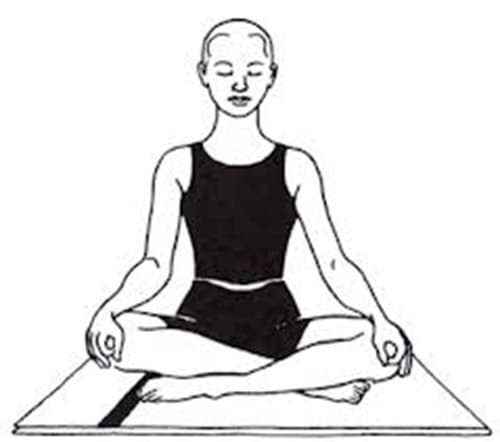
I consider it one of the most effective and accessible poses to help you feel your back and stomach. The key rule is: don’t slouch. If you notice you can’t straighten up, use a yoga block (you can buy one at any sporting-goods store or online). Later, if you want to increase the load, sit on a lower block or swap it for a stack of thick books.
Exercise 2
Siddhasana (star pose). It resembles the previous position, but now one leg rests on top of the other. As with Sukhasana, remember to alternate your legs.
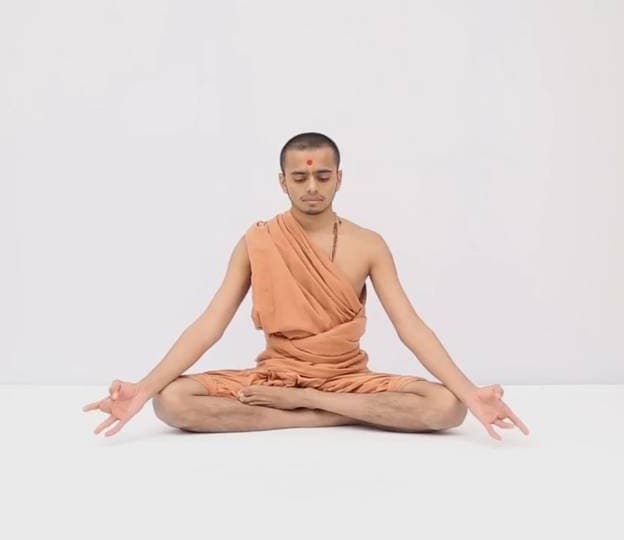
I recommend doing this pose right after the first exercise. It is slightly more difficult and requires a good stretch, but it clearly shows whether you have any spinal curvature. If certain muscles are tense, you’ll feel your body tilt to one side.
Exercise 3
Stomach vacuum.
As experience has shown, any saxophonist deals not only with the diaphragm (to clarify: the muscle separating the chest and abdominal cavities, serving to separate the lungs; its boundary can conditionally be drawn along the lower edge of the ribs), but also with the abdominal muscles, which push the air out while being in tone (a state of prolonged, steady excitation of nerve centers and muscle tissue not accompanied by fatigue. Tone is determined by the natural properties of muscles and the influence of the nervous system). This exercise is the core tool for keeping the abdominal muscles in the right condition.
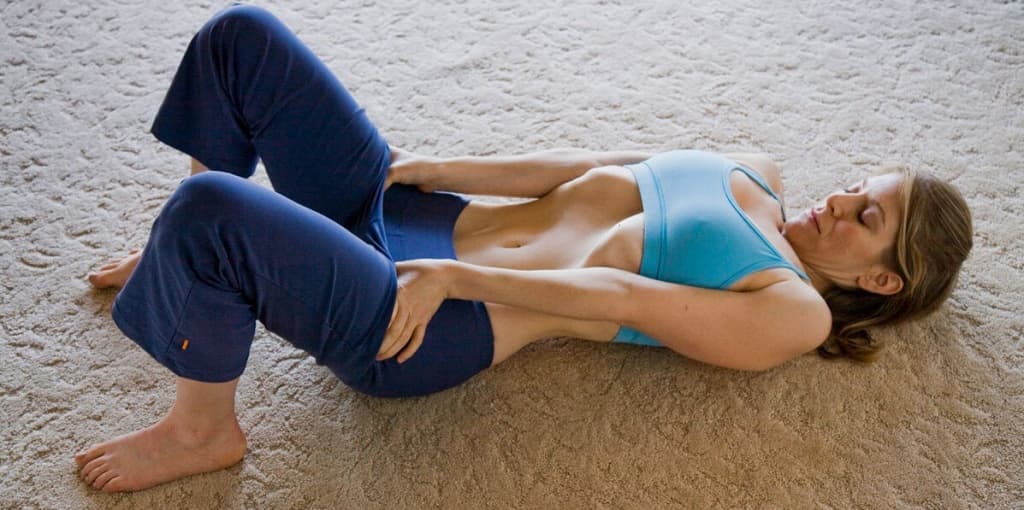
Thanks to this exercise I finally learned to feel my abdominal muscles clearly. You can perform the stomach vacuum in four positions (let’s start with the easiest): 1) lying on your back, 2) on all fours, 3) sitting, 4) standing. From my experience, the simplest way is lying down — you immediately feel the muscles, and you can do it right after waking up on an empty stomach.
So, perform it: take the starting position; take a deep breath through your nose; exhale sharply through your mouth (you need to free the lungs from air as much as possible) and hold your breath; simultaneously with the exhalation, strongly pull your stomach in, as if you want to press your navel to your spine; stay in this position for 15 seconds (if at first you cannot hold your breath that long, take a small breath but do not relax your abdominal muscles, or do the exercise for a very short period — 3–5 seconds); exhale slowly and gradually relax the muscles (do not exhale sharply); take a couple of breaths and repeat the stomach vacuum exercise again.
Tip: when you start doing the exercise and you begin to run out of air, take a small breath and then exhale even more. Then your stomach will pull in even deeper.
Exercise 4
Head tilts — classic tilts and turns of the head left and right and circular rotations of the head in both directions.
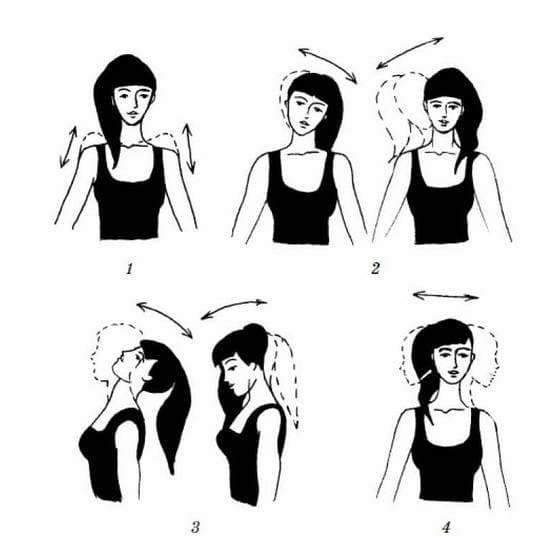
This exercise is excellent for saxophonists, since some use straps that hang on the neck, which can strongly affect posture.
The most important thing is not to rush and to perform these exercises with a deep awareness not only of the neck, but of the whole body (back, abdomen).
Exercise 5
Expander
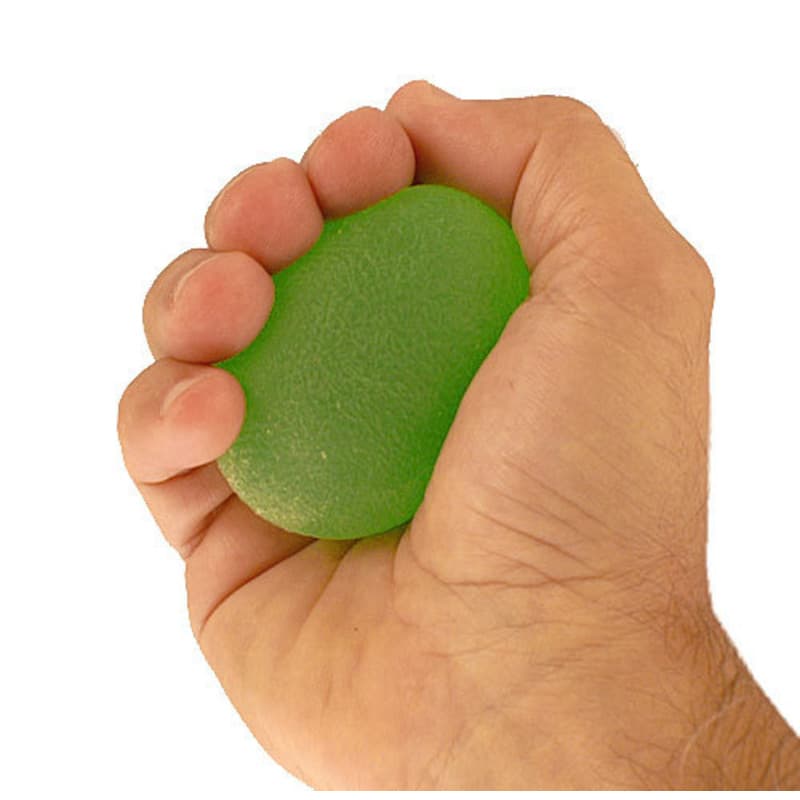
Working with an expander is a mandatory exercise for small children, since most often the forearm muscles are not yet strong. You can buy such a resilient ball in any sports store. It is much easier to practice with it than with a usual expander. The forearm muscles play a huge role in a musician’s sensations, since there are the flexors and extensors of the wrist, and the position of the wrist affects the work of the fingers, and the fingers are the parts of the body that touch the instrument; not only technique but also sound depends on their lightness.
At first I thought I could fit all the exercises into one article, but the topic turned out to be very large, and you will be able to read the continuation in the next part.