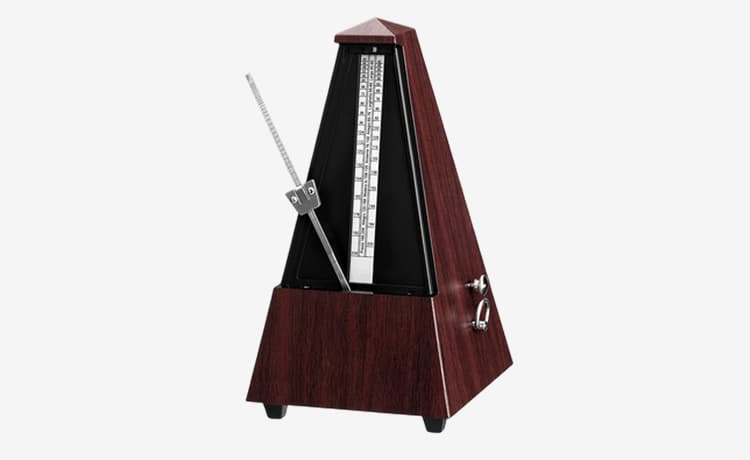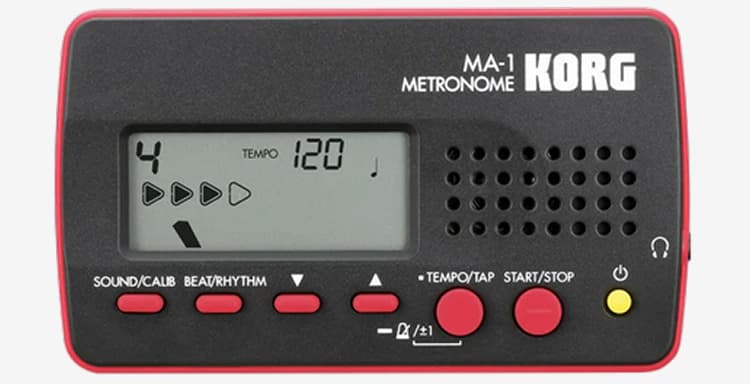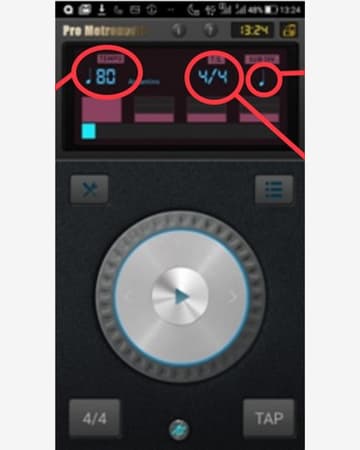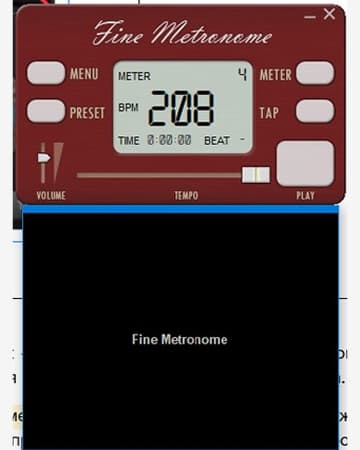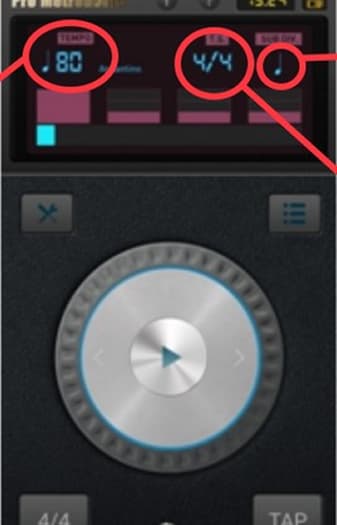

A metronome is a device that produces a certain number of beats per minute and helps develop a sense of rhythm and the ability to maintain tempo. All metronomes work the same way: you set the tempo, and the device will click, with each beat corresponding to a quarter, eighth, or sixteenth note — depending on the execution speed you choose. For example, 120 beats per minute can be taken as an eighth (fast playing) or a sixteenth (slow playing).
Even if you feel rhythm and note values well, I still recommend using a metronome: you will hit the beat more accurately and more consistently. Even experienced saxophonists — both classical and jazz — constantly practice with a metronome.
Working on rhythm, you should also monitor sound quality, tone production, musical phrasing, and your playing apparatus. Parallel work in these areas will significantly improve your level of playing.
It is better to learn to use a metronome together with a teacher: they will suggest how to set it correctly, which note values and tempo to choose. Independently, without a teacher, metronomes are used by already experienced performers. If it is still difficult for you to play to a metronome, listen to the click several times and then play along with it.