
Project ofKrylevsky School
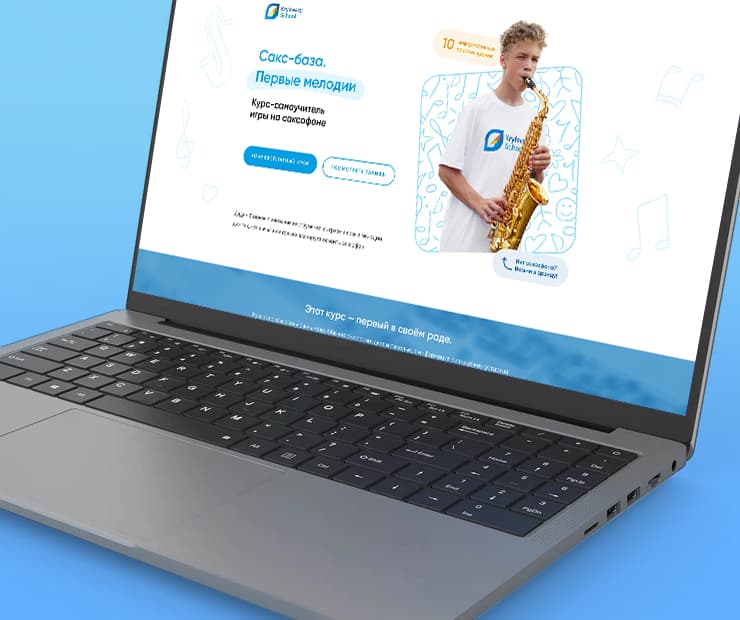
Online course for saxophone
for beginners

Sax Base
First melodies
You'll build a solid foundation with the instrument and play your first melodies. This course is designed for those who have just started or are planning to begin learning the saxophone.

This course is the first of its kind.
There are very few saxophone courses. Most are bulky, hard to digest, and packed with outdated info. This one relies on up-to-date saxophone knowledge, uses clear language, and doesn’t demand any special background.
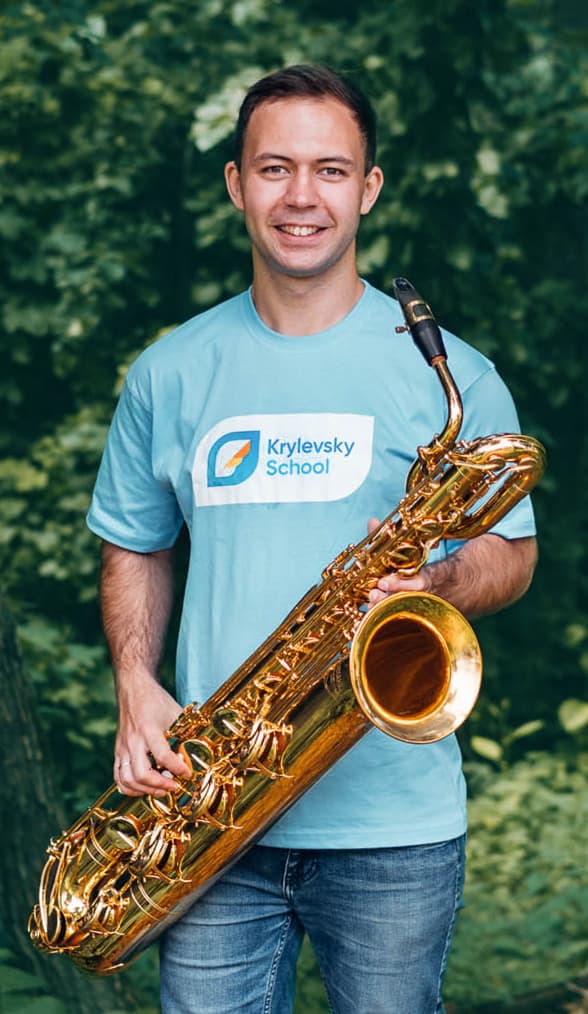
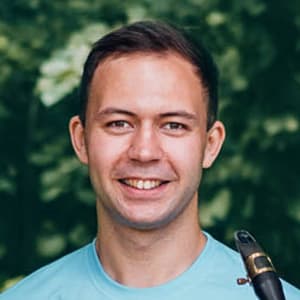
Course author — Evgeny Krylevsky
professional saxophonist, competition winner, and instructor
Education
- State Musical College named after the Gnesins, major in Saxophone
- Gnesin Russian Academy of Music, major in Wind Orchestra Conducting
Performance experience
- Laureate of all-Russian competitions
- Participant in music competitions, festivals, and concerts
- Guest artist with symphony orchestras
- Jury member of all-Russian competitions
Teaching experience
- Worked in state music schools for 10+ years
- Guest instructor at Yuri Bashmet educational centers
- Guest instructor at summer schools in Vologda since 2022
- Creator of offsite music intensives held 2–3 times a year since 2017
- Author of educational programs and the play-sax.ru portal
- Private saxophone instructor since 2010
100+ of my students chose a musical career!
The course method is built on years of teaching practice and tested with students of every level.
My students become laureates of national and international competitions and move on to music colleges.
This course is for you if:

You want to try a new instrument

You prefer to learn the basics before going to a teacher

You need to figure out whether this instrument is for you

Reading music, terminology, or theory feels confusing

You haven’t played yet but already went through some materials

You’re unsure whether you’ll stay motivated for serious lessons

You studied with teachers but didn’t get real results

Hiring a private teacher is too expensive
The first lesson is free
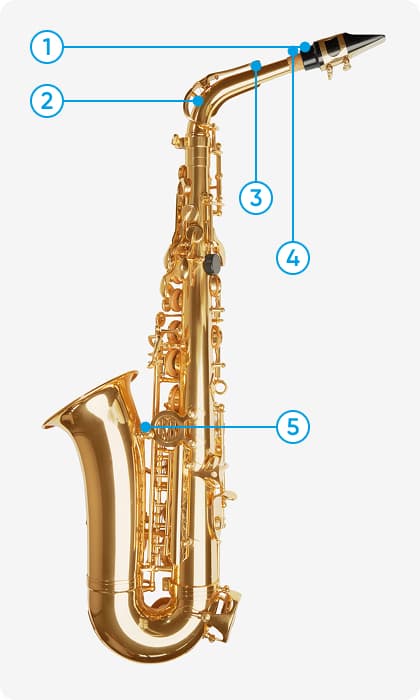
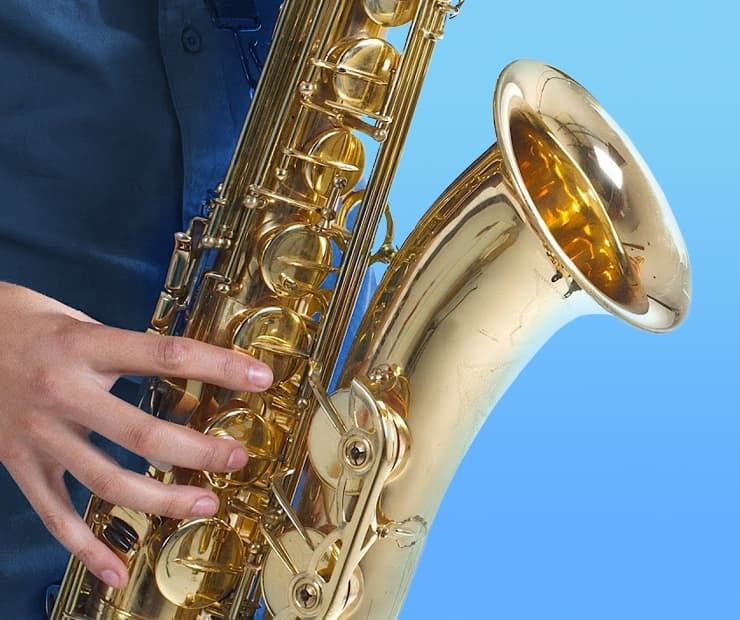
Learn the main saxophone parts and how to assemble the neck — the entire top section.
Course highlights

Up-to-date knowledge
A structured digest of insights from top professional schools worldwide.

No teacher required
Designed for self-study and packed with every resource you need.

Compact curriculum
Finish in three months or faster depending on your dedication and skills.
First melodies right away
Start producing notes and playing tunes after just a couple of lessons.
Find the right saxophone
Get recommendations for buying or renting gear on any budget.

Plain language
The course is highly accessible and clear. No music education required.
The course works because it’s comprehensive
1
Learn to play and handle the instrument without diving into unnecessary tech details
2
Follow a gradual path from the simple to the complex
3
Balance theory and practice, technique and beautiful tone
4
Play popular melodies alongside pieces that refine your technique
Trying something new isn’t scary!
The course is built for everyday learners. No overly complex nuances, tricks, or jargon — just plenty of explanations. A professional musician and teacher wrote it, and we edited the material to be clear even for non-musicians.
Course program
| Lesson | What’s inside | Outcome |
|---|---|---|
| 0. Welcome to the course, how to study, and how to get ready | ||
1. Assembling the saxophone |
| Assemble the neck (the upper part of the saxophone) and learn how to handle the instrument safely. |
2. Getting the first sound |
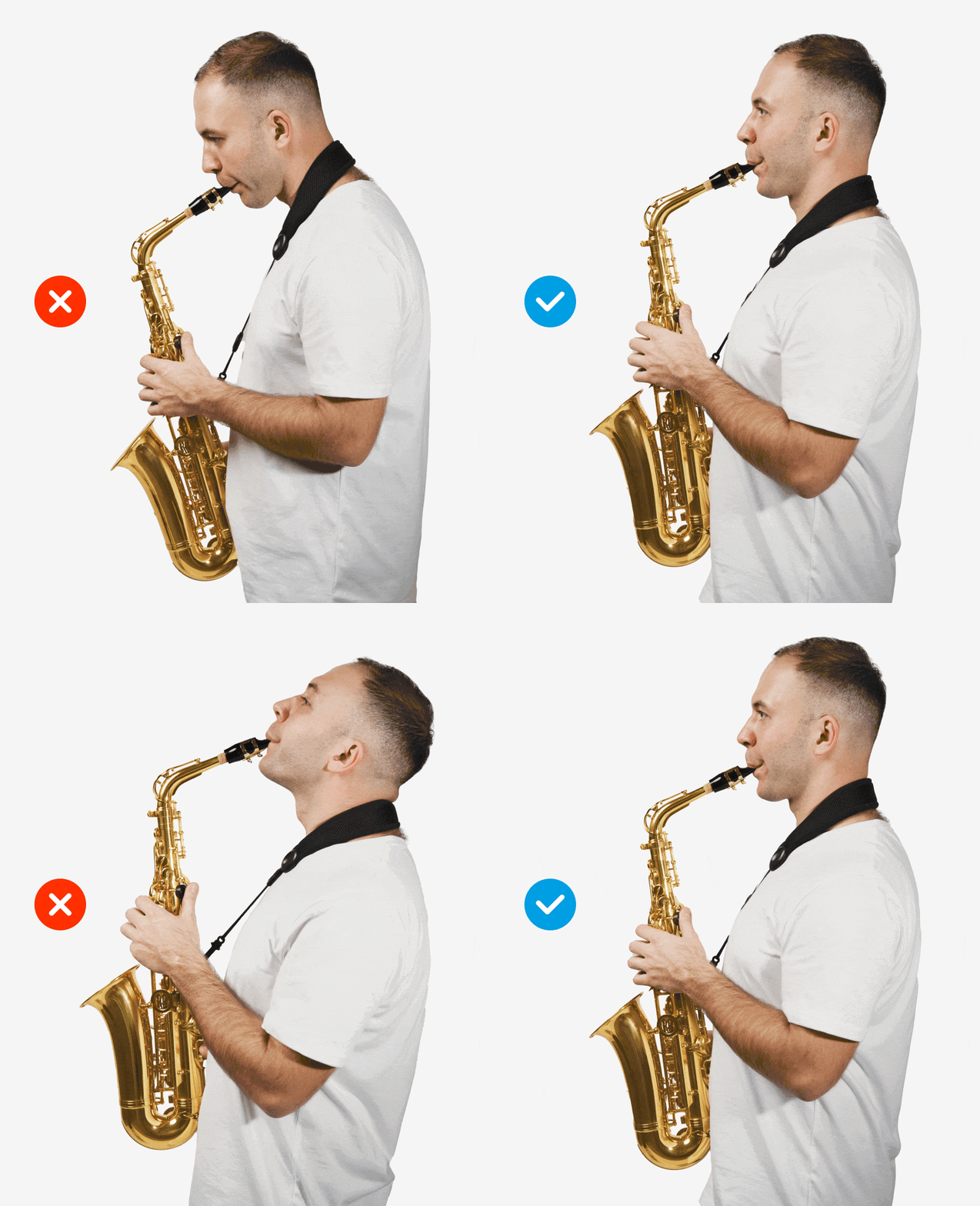
| Build your embouchure and produce the first sound on the neck |
3. Playing the first note |
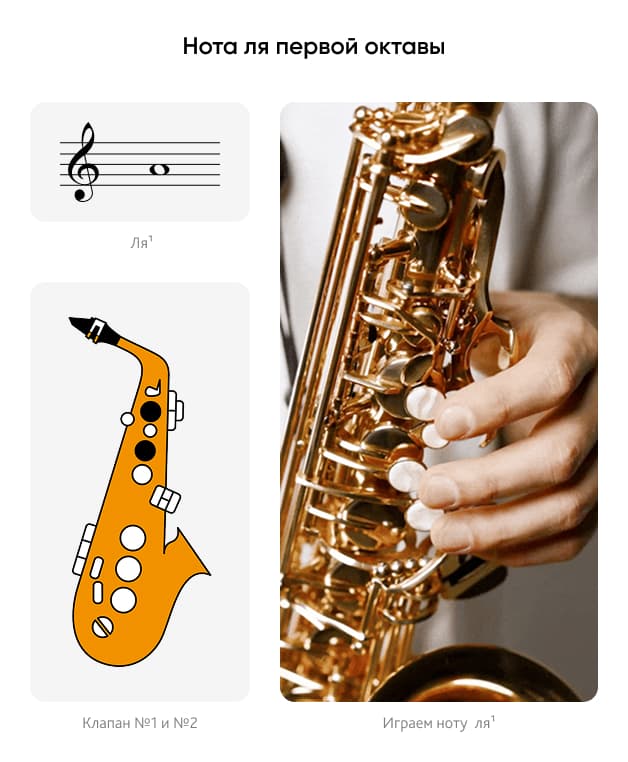
| Fully assemble the saxophone, set your hands, and play the first C-sharp in the second octave |
4. Learning the left-hand notes |
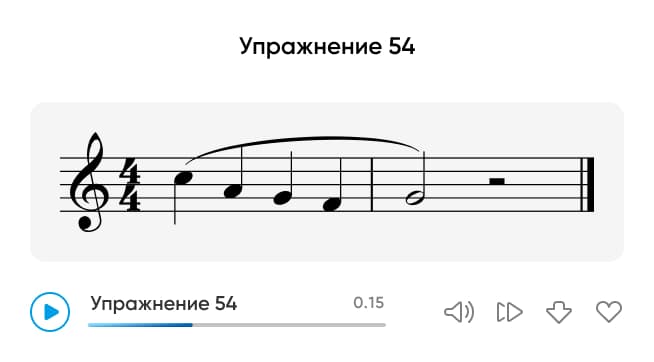
| Fully assemble the saxophone, position your hands, and play the first exercises and melodies from sheet music |
5. Learning the right-hand notes |
| Discuss the embouchure and learn several right-hand notes |
6. Musical intervals |
| Study basic musical intervals, notes with the octave key, and the D note in the first octave |
7. G major scale |
| Practice playing scales — the fundamental element that makes even complex melodies easier |
8. Détaché articulation |
| Learn to play the scale and new melodies using the détaché articulation |
9. B-flat note and F major scale |
| Study the new F major scale using both legato and détaché articulations |
10. G-sharp note and A minor scale |
| Play a new note and use it in A minor. Study natural, harmonic, and melodic minor forms |
11. E-flat note and B-flat major scale |
| Learn the E-flat note and rehearse it inside the B-flat major scale |
12. Famous melodies |
| In the final lesson we recap everything by studying well-known pieces |
+ Bonus materials — articles and videos
150
technique exercises
32
notes of the first, second, and third octaves
15
academic, essential, and popular melodies
What the lessons look like
Course outcomes
Follow detailed tips to pick an affordable saxophone setup
Learn the basics of playing: hand and embouchure setup, breathing, and producing tone
Discover how to assemble your saxophone, adjust the sound, read notation, and play from it
Gain foundational music theory knowledge and reinforce it with practice
Play 15 melodies, including classics like Happy Birthday, Strangers in the Night, and Kalinka
Try a new role at a friendly price and decide whether you want to keep learning
Study materials you can breeze through
Clear lesson structure
Lessons are organized so the material feels easy, logical, and predictable.
- 1
What we’ll cover
- 2
Preparation
- 3
Theory
- 4
Fingerings
- 5
Exercises
- 6
Recap
Varied content
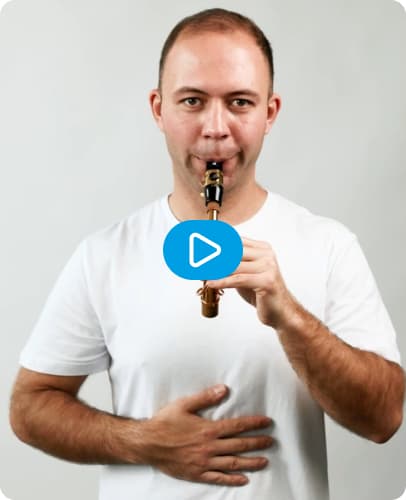
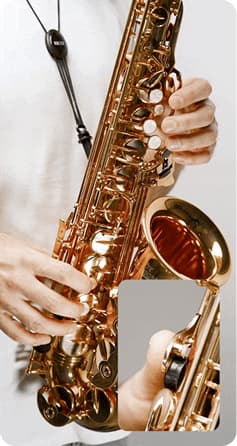
The course is full of short videos, animations, audio clips, photos, sheet music, and diagrams — everything you need to make learning engaging and approachable.

Plenty of illustrations
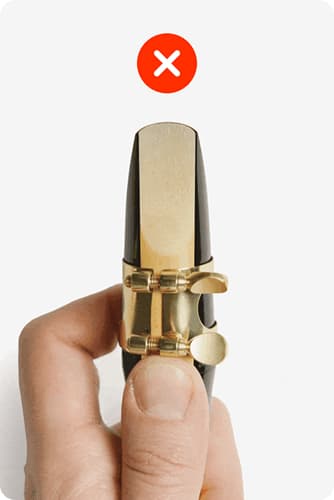
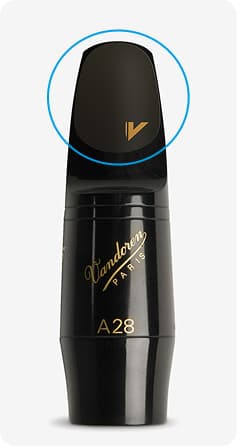
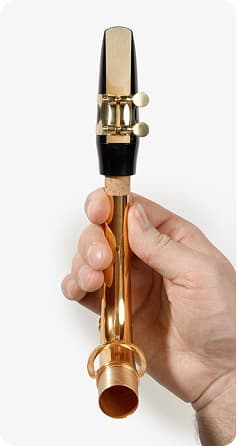
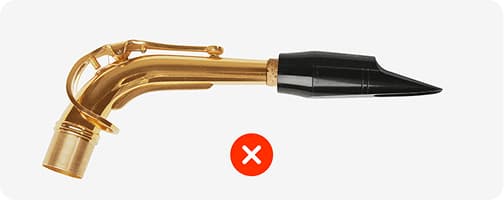
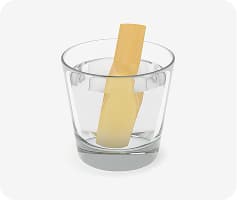
Visual clarity is our top priority, so we illustrated every step, even the small ones. You’ll grasp nuances and tips you rarely hear about elsewhere.
Course pricing
Swipe to see more
Course only
Lifetime access to every lesson
Extra materials: articles, videos, and more
4 800 RUB
Course, chat, two lessons
Lifetime access to every lesson
Extra materials: articles, videos, and more
Support chat
Two private lessons with me online or offline in Moscow
9 700 RUB/mo
Popular questions
Is it easy to make a sound on the saxophone?
If you follow the course instructions, yes — even if it doesn’t work on the very first try.
Which saxophone should I start with?
Kids up to 9 usually play soprano sax: it’s lighter and the keys sit closer together. For everyone else I recommend an alto sax — the medium mouthpiece helps form a sound quickly and the convenient key layout simplifies hand and finger placement. Tenor and baritone saxophones are better suited for experienced musicians.
If you already own a saxophone, try studying with it. If it feels uncomfortable, switch to an alto.
Are Chinese saxophones OK?
Yes. Taiwan and Indonesia also produce solid instruments.
What should be included in the kit?
When you buy a saxophone, make sure it comes with a suitable mouthpiece, reed, and ligature with a cap. You’ll also need a neck strap, a case for storage and transport, plus cleaning swabs.
How do I practice without disturbing my neighbors?
Honestly, you can’t—unless you’re in a studio with serious soundproofing. Just skip practice during quiet hours so you don’t break building rules.
There are special mute bags, but they don’t absorb the entire sound and they distort it, making it harder to judge how accurate your playing is.
What age group is the course for?
From 10 and up (kids can start at 6–7, but they typically need a teacher at that age). Most participants are between 18 and 30.
Are there any health restrictions?
No strict contraindications. If you’ve had abdominal or diaphragm surgery, talk to a specialist first. Otherwise many doctors even recommend wind instruments for asthma.
Will I learn how to read sheet music?
That depends on you. The course offers plenty of accessible material with tips and guidance.
What guarantees do I get?
I can’t guarantee your results — they mostly depend on you. It’s a self-paced course, which assumes independent work. Even a formal school won’t guarantee anything.
How do I get the first trial lesson?
Sign in to the platform however it’s convenient. Access stays with you forever. No ads or spam.
Can I get a refund if I don’t like it?
Yes, you can request one within 10 days of payment. No questions asked.
We want to buy with friends. Can we get a discount?
Send me a message and we’ll discuss it.